Overview
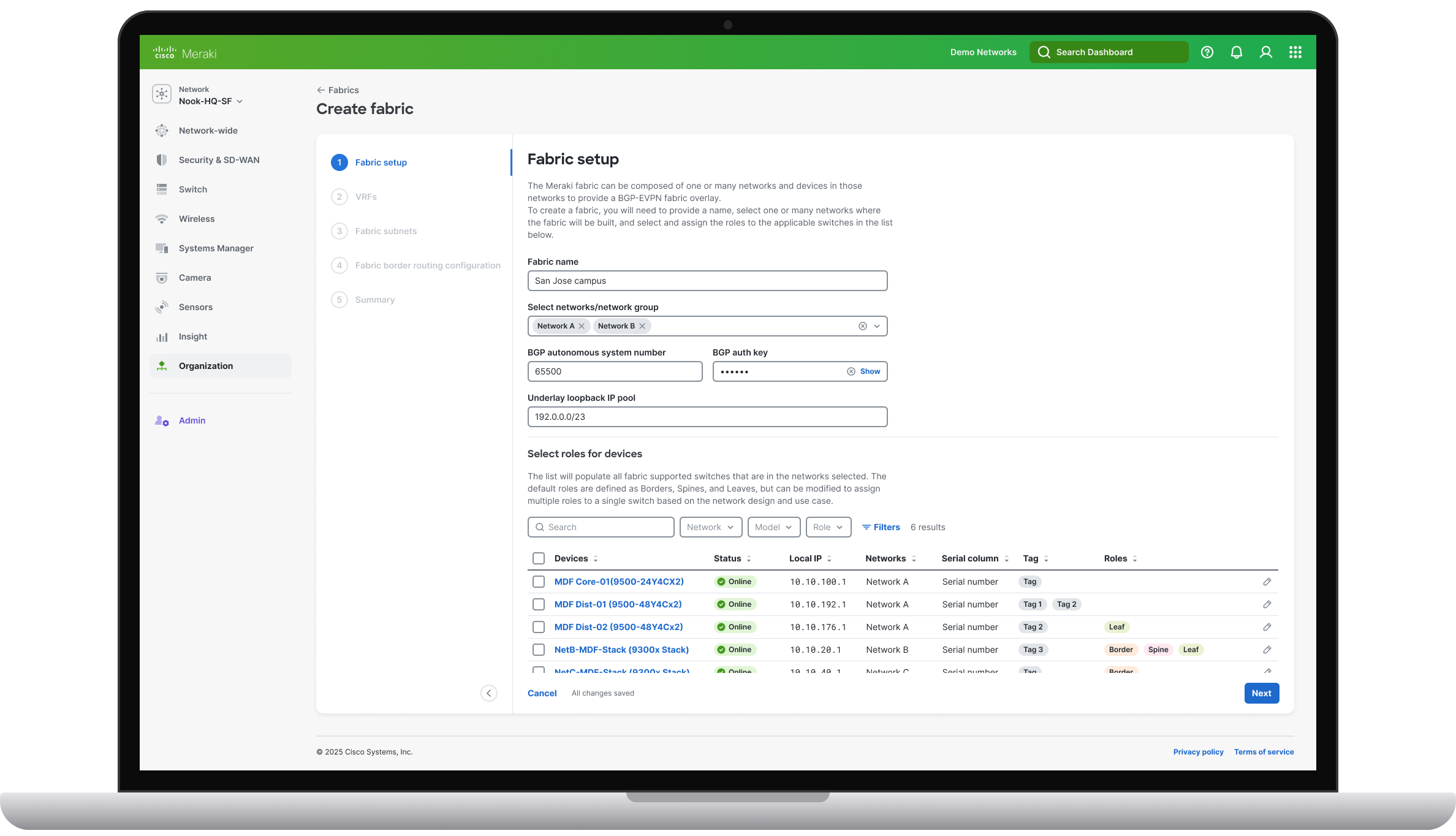
I worked on Fabric Details, a new dashboard experience within Cisco Meraki. In collaboration with a senior product designer, I helped define the information structure, user flows, interface hierarchy, and high fidelity designs while working within Meraki's established design system.
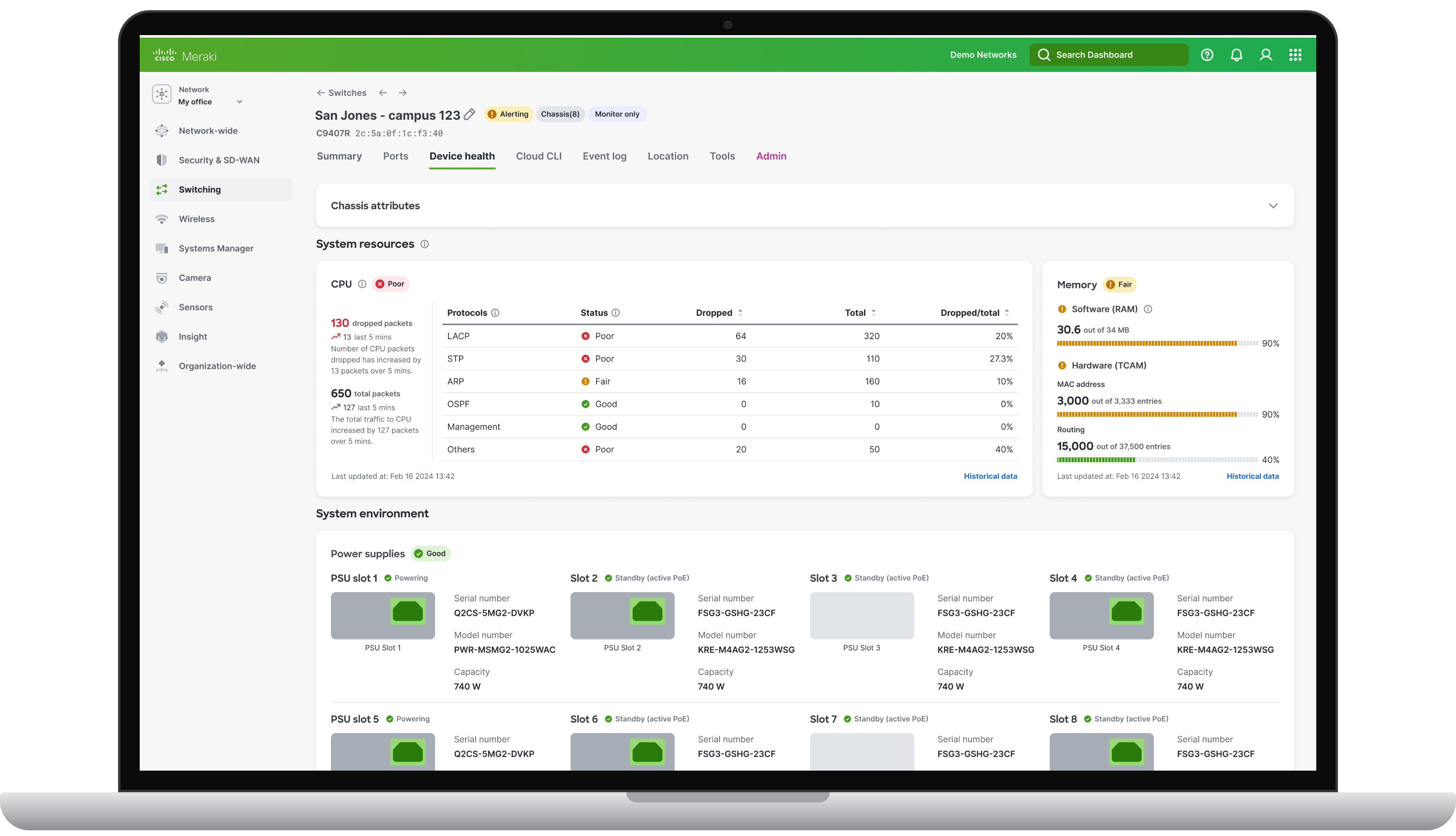
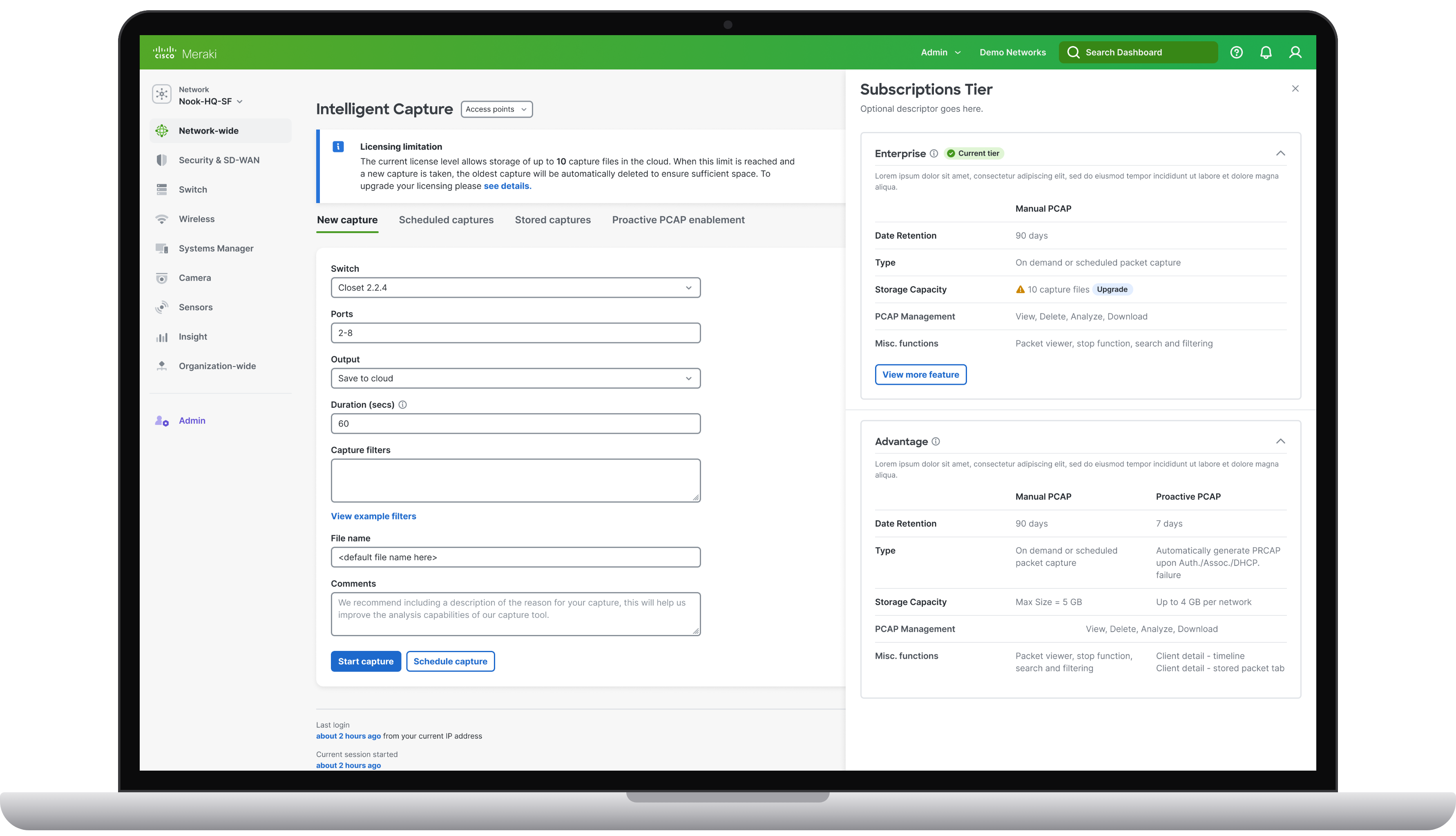
I also independently owned selected updates to Modular Switch and Trial Licensing, translating product requirements into clearer administrative flows and implementation ready designs.
Across the work, I partnered with product, engineering, and the dashboard team to make sure new experiences were technically feasible and fit naturally into the larger Meraki platform.
About this case study
This page focuses on selected Cisco Meraki work across Fabric Details, Modular Switch, Trial Licensing, and enterprise dashboard patterns.
Because parts of the work are confidential, the case study highlights the design problems, iteration process, system thinking, and interface patterns I worked on without exposing sensitive product details.
The challenge
Fabric Details was a new dashboard experience inside an established enterprise platform, and it had to bring complex device and infrastructure information into a clearer view.
The challenge was not simply to design a new screen. It was to define how that information should be structured and prioritized while working within Meraki's established design system.
Modular Switch and Trial Licensing needed something different: selected updates that turned product requirements into clearer administrative flows. Across all three, the designs had to be technically feasible and fit naturally into the larger Meraki platform.
The work required ongoing iteration, cross-functional review, and close alignment with other teams so Fabric Details could support new infrastructure workflows without feeling disconnected from the rest of the product system.
Design goals
What I designed
On Fabric Details, I worked with a senior product designer on the information structure, user flows, interface hierarchy, and high fidelity designs. On Modular Switch and Trial Licensing, I owned selected updates, turning product requirements into clearer administrative flows and implementation ready designs.
The main design challenge was giving complex technical information a clearer structure while keeping new work native to the larger Meraki platform.
Key product areas
Design decisions
What this project shows
Cisco Meraki shows how I approach enterprise product design inside a mature platform: structuring complex information, clarifying administrative flows, and working within an established design system.
It also reflects my ability to design within real product constraints, where the value is not only in the final UI, but in the iteration, system thinking, alignment, and decisions that help new work fit into a larger platform.