01 — Overview
Little Sort started with a simple idea: make a relaxing sorting game that people could pick up for a few minutes and enjoy at their own pace.
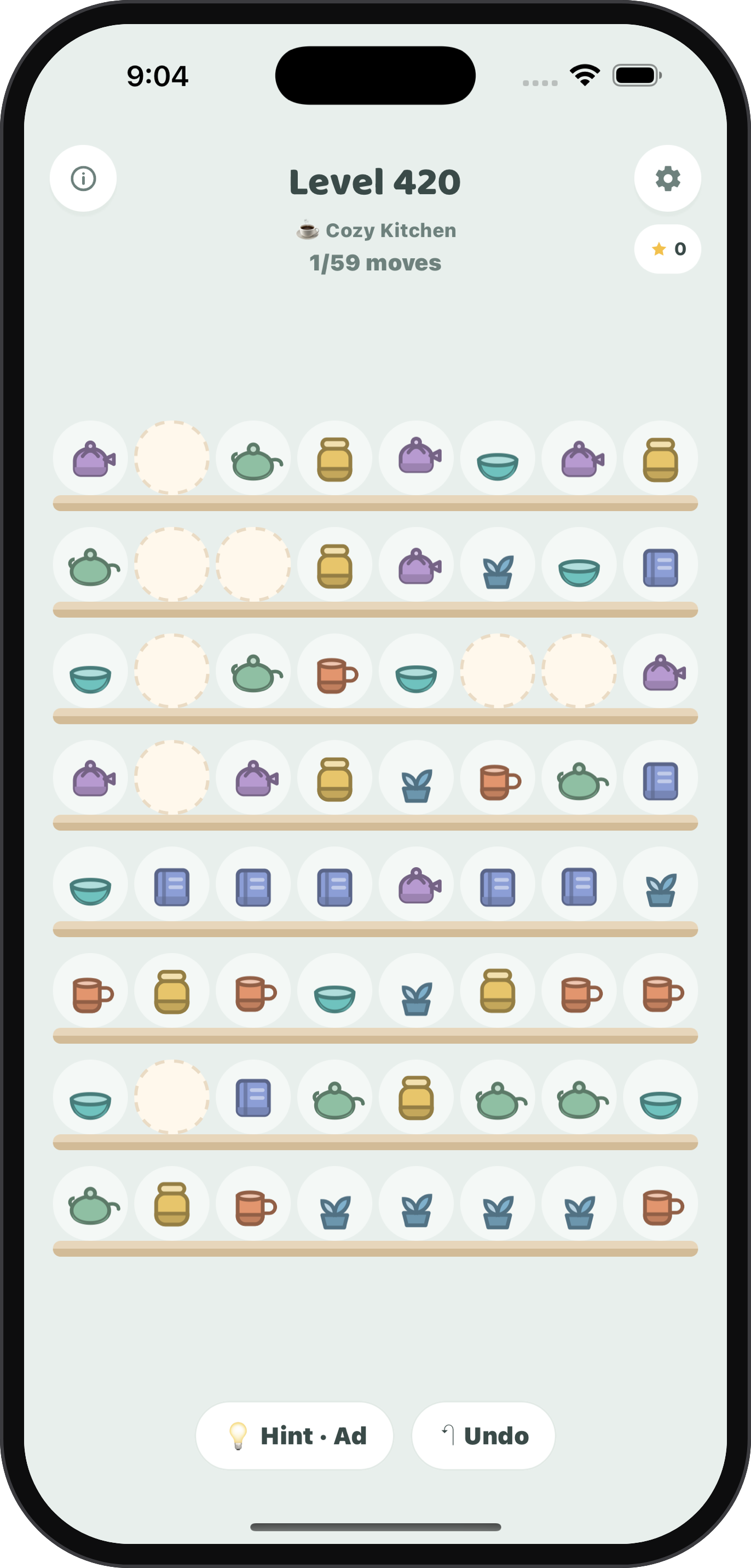
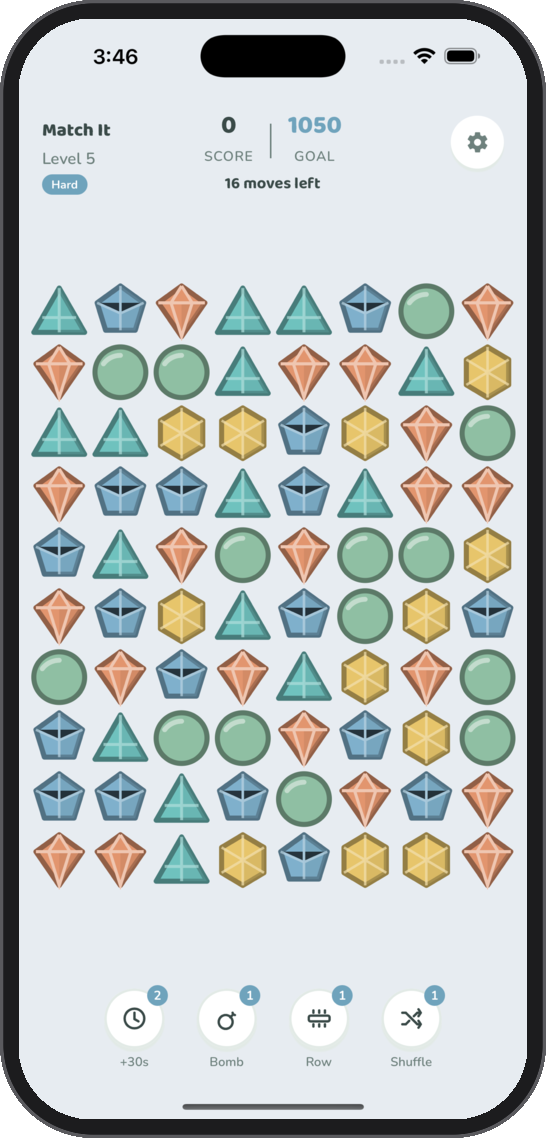
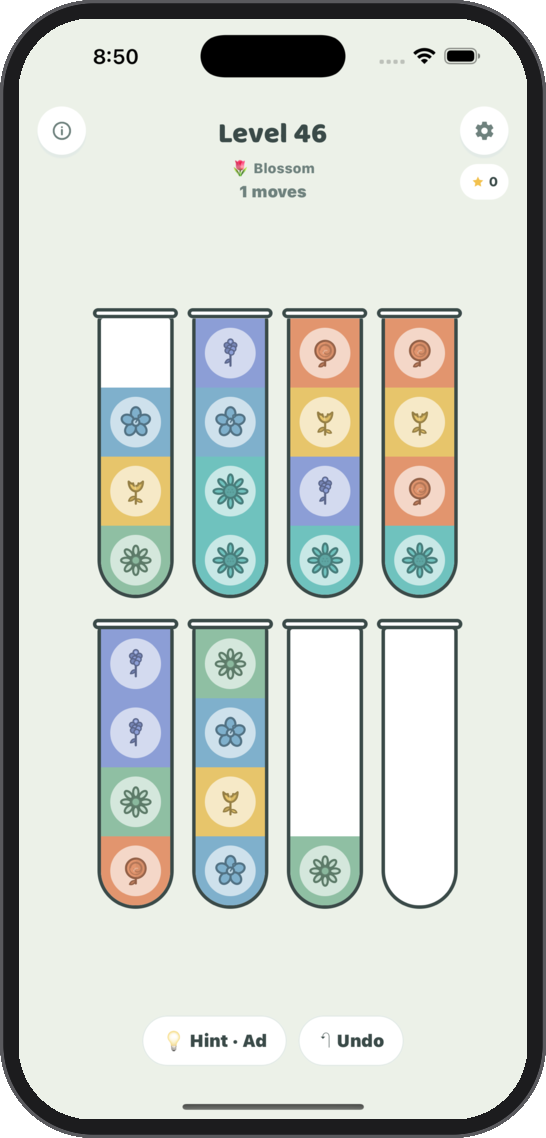
The first version was planned around one shelf sorting game and 30 levels. As I designed, built, and tested the experience, it grew into a collection of three live game modes, a Daily Challenge, themes, rewards, optional cloud save, and paid features.
The challenge was not just designing a game screen. It was creating a complete mobile product that felt cohesive from the first move through progress, purchases, and updates.
02 — The product
Simple to start. Satisfying to return to.
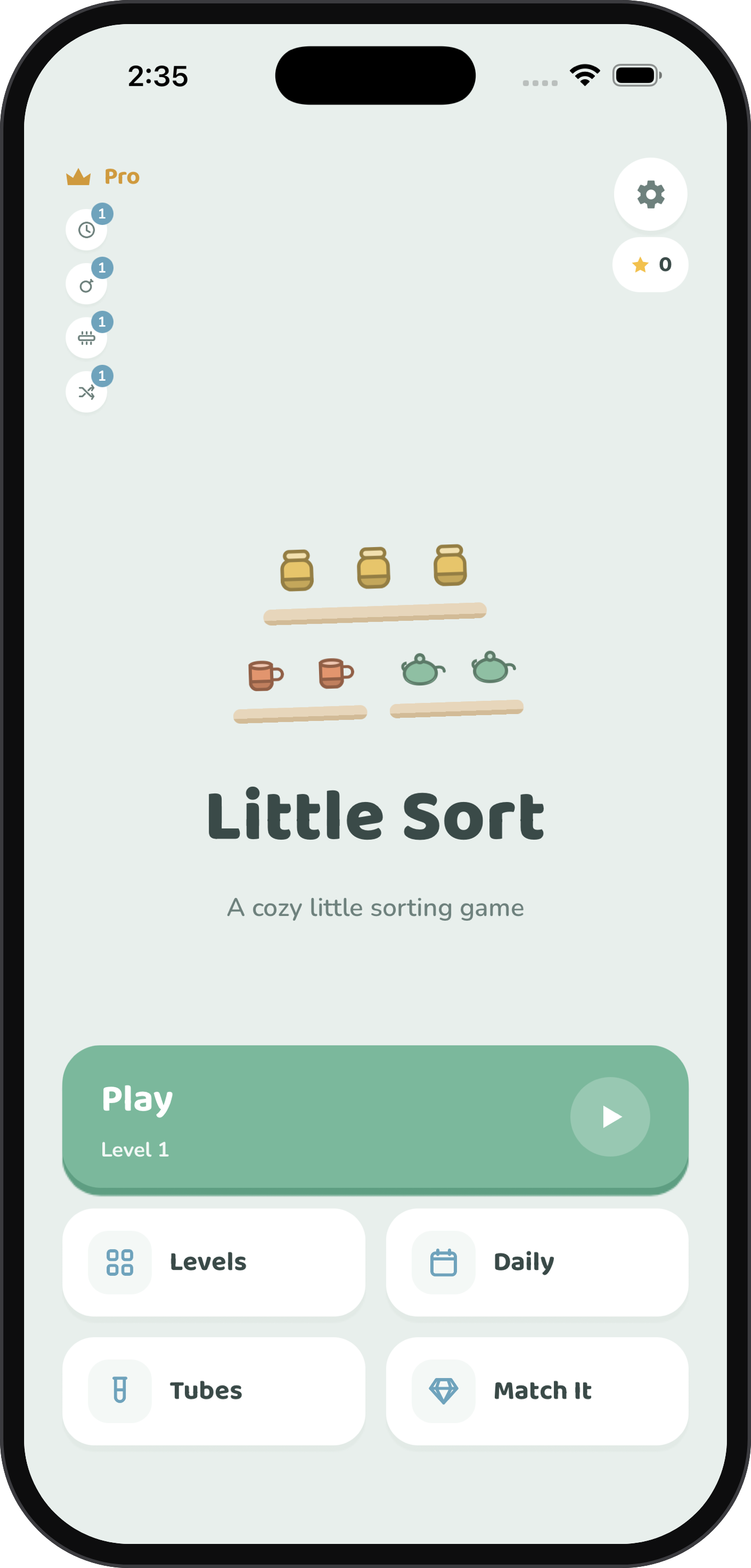
Little Sort brings several puzzle experiences together in one calm, colorful app.
Players can start without creating an account. Optional sign in and cloud save provide a way to keep progress connected to an account.
03 — My role
I created Little Sort under Celestial Works and led the product from concept through launch and ongoing improvements.
My work included:
- Defining the game concept, product scope, and visual direction
- Designing the experience across gameplay, progression, rewards, themes, and purchase flows
- Setting requirements and making product decisions throughout the build
- Working with Claude Code and Codex to implement, review, and test the app
- Testing gameplay, purchases, and account behavior on real devices
- Preparing store listings, screenshots, builds, and submissions for iOS and Android
- Continuing to investigate bugs and improve the product after release
04 — Designing for a calm experience
A cozy game without pressure
Little Sort was designed for people looking for a relaxing break. The visual direction uses colorful objects, soft details, and inviting themes, while the gameplay allows players to take their time.
A player can open the app and begin playing without signing up. That decision kept the first experience focused on the game itself.
At the same time, the product needed enough variety and progression to give players a reason to return. Levels, stars, streaks, daily gifts, themes, and the Daily Challenge were designed to support that longer experience.
05 — From one idea to a product system
More than the puzzle board
The first concept was a single shelf sorting mode. As the product evolved, I worked through how multiple modes could feel like part of the same collection without losing their individual gameplay.
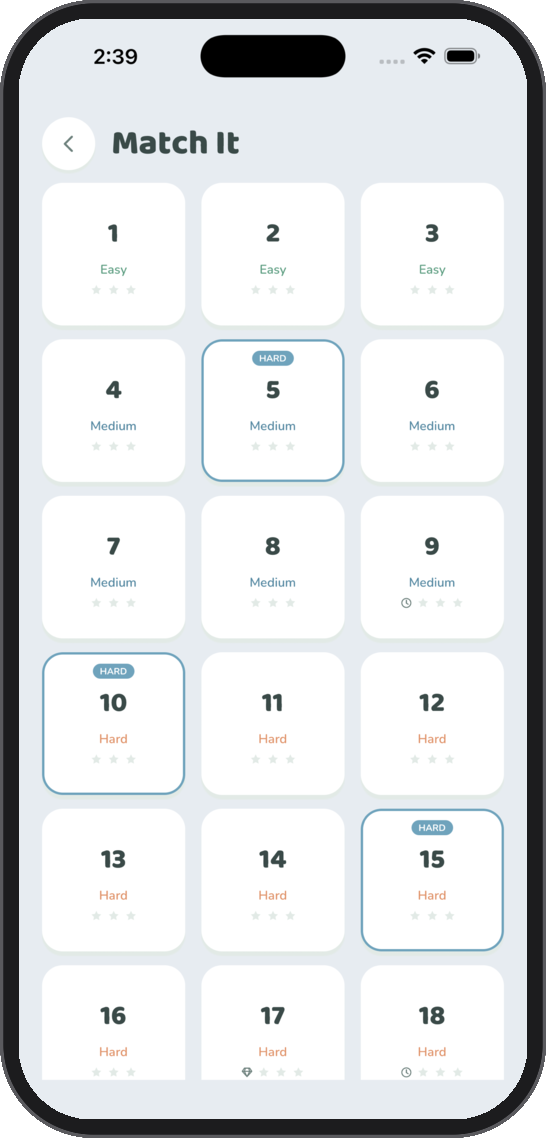
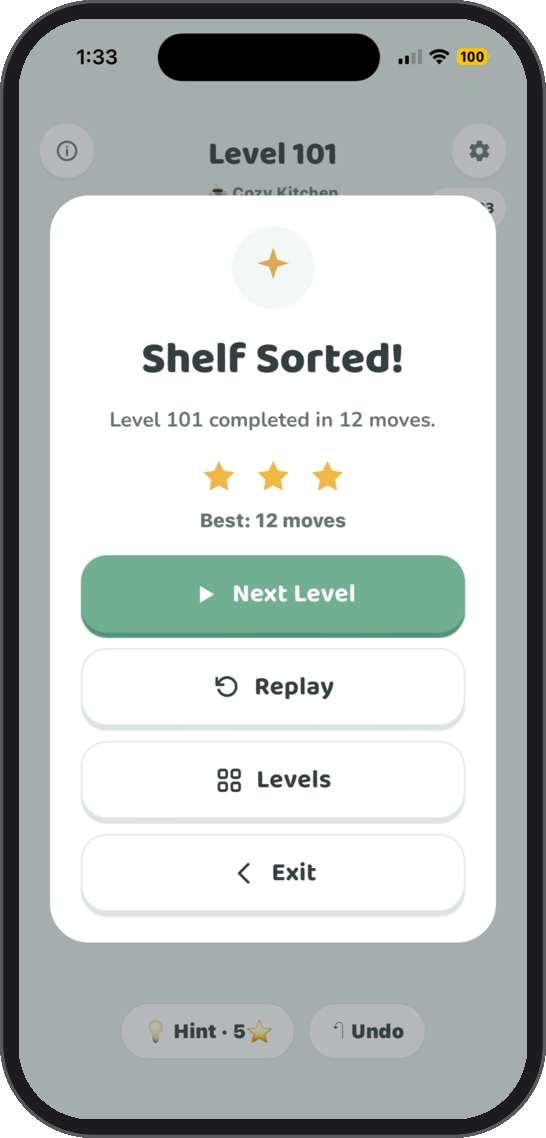
The released product includes 1,150 levels across Shelf Sort, Tubes, and Match It. Alongside the games, I designed the supporting experience around progression, hints, rewards, settings, and access to paid features.
This required thinking beyond individual screens. Each feature needed to work with the player’s progress, account state, purchases, and the rest of the app.
06 — Decisions that shaped the product
07 — Testing the experience beyond the design
A polished screen is only the beginning
Once real accounts, purchases, ads, and saved progress were connected, the work became about more than whether the interface looked right.
One issue caused Pro access to disappear after the app was reopened. Testing uncovered multiple causes across network handling, purchase initialization, and ownership checks. The fixes were tested until Pro access remained available after closing and reopening the app.
On Android, testing also uncovered a touch issue where buttons responded above their visible position. The shared layout was corrected so the touch area matched what players saw.
I also tested the experience around ads and rewards. When an extra moves offer required two ads instead of the expected one, the flow was corrected so players received the reward after the first ad.
These moments reinforced that product quality includes trust, clear expectations, and the details players may never notice when everything works correctly.
08 — Working with AI coding tools
Product judgment stayed human
I used Claude Code and Codex throughout the build to help turn product requirements and designs into working software.
My process was collaborative: I set the direction and reviewed a plan, the tools implemented and checked changes, and I tested the experience on real phones before approving builds and submissions.
The tools helped accelerate implementation, but I remained responsible for what the product should do, how it should feel, which issues needed attention, and when it was ready to move forward.
09 — Launch and iteration
Little Sort was submitted to the App Store in August 2026 and released on Google Play on October 1, 2026. It is available on both platforms.
After launch, I continued improving purchase reliability, hints, ad behavior, account flows, daily gifts, support, and the store experience.
I also ran small Apple and Google advertising tests to start learning how people found the game. The results were early, so I treated them as initial signals rather than proof of long term growth.
10 — What this project shows
Little Sort shows how I work across the full life of a product: defining a focused idea, designing the experience, directing an AI assisted build, testing real behavior, navigating store submission, and improving the product after launch.
It also reflects my belief that thoughtful design continues beyond the interface. A purchase that restores correctly, a touch target that works, and a reward that delivers what it promises are all part of the experience.