01 · Overview
What if an AI companion felt less like a chatbot and more like a little creature you could actually connect with?
That question became INKI, a playful AI companion made from a tiny drop of living ink.
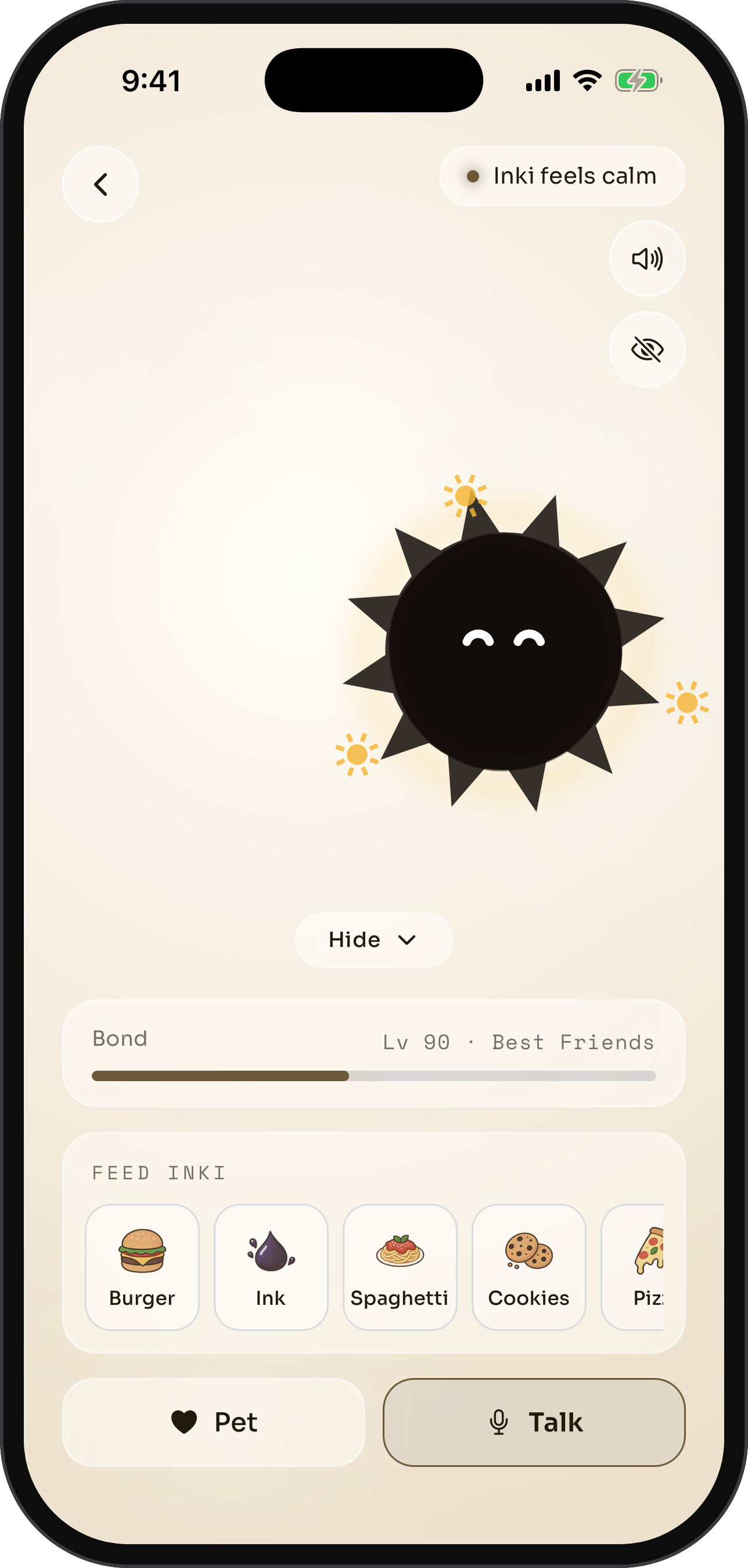
INKI talks, listens, reacts, and has a personality of its own. You can feed it, pet it, play together, or simply spend a quiet moment drawing and exploring sounds.
I designed and built INKI from zero to one, bringing together product strategy, visual design, character motion, conversational AI, and mobile development into one experience for iOS and Android.
02 · The idea
Most AI products are designed to help you get something done. I wanted to create one you could simply enjoy spending time with.
Traditional AI conversations often begin and end in a text box. I wanted INKI to feel different.
Instead of putting a chatbot behind a character, I designed the experience around the character itself.
INKI's movements, expressions, and reactions are part of how it communicates. It can be curious, silly, affectionate, or a little mischievous. Sometimes it wants to talk. Sometimes it just wants a snack.
And sometimes, you don't feel like talking at all.
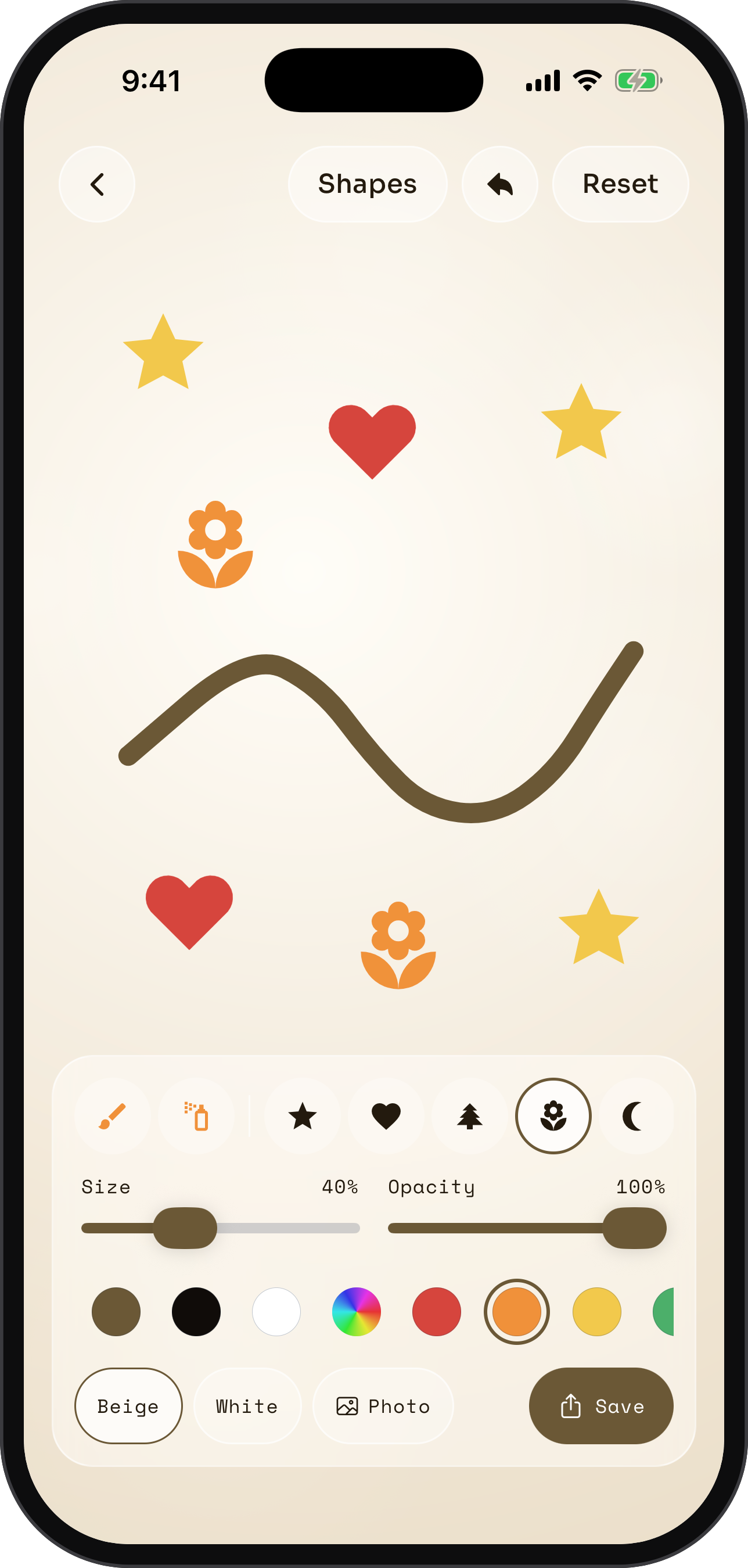
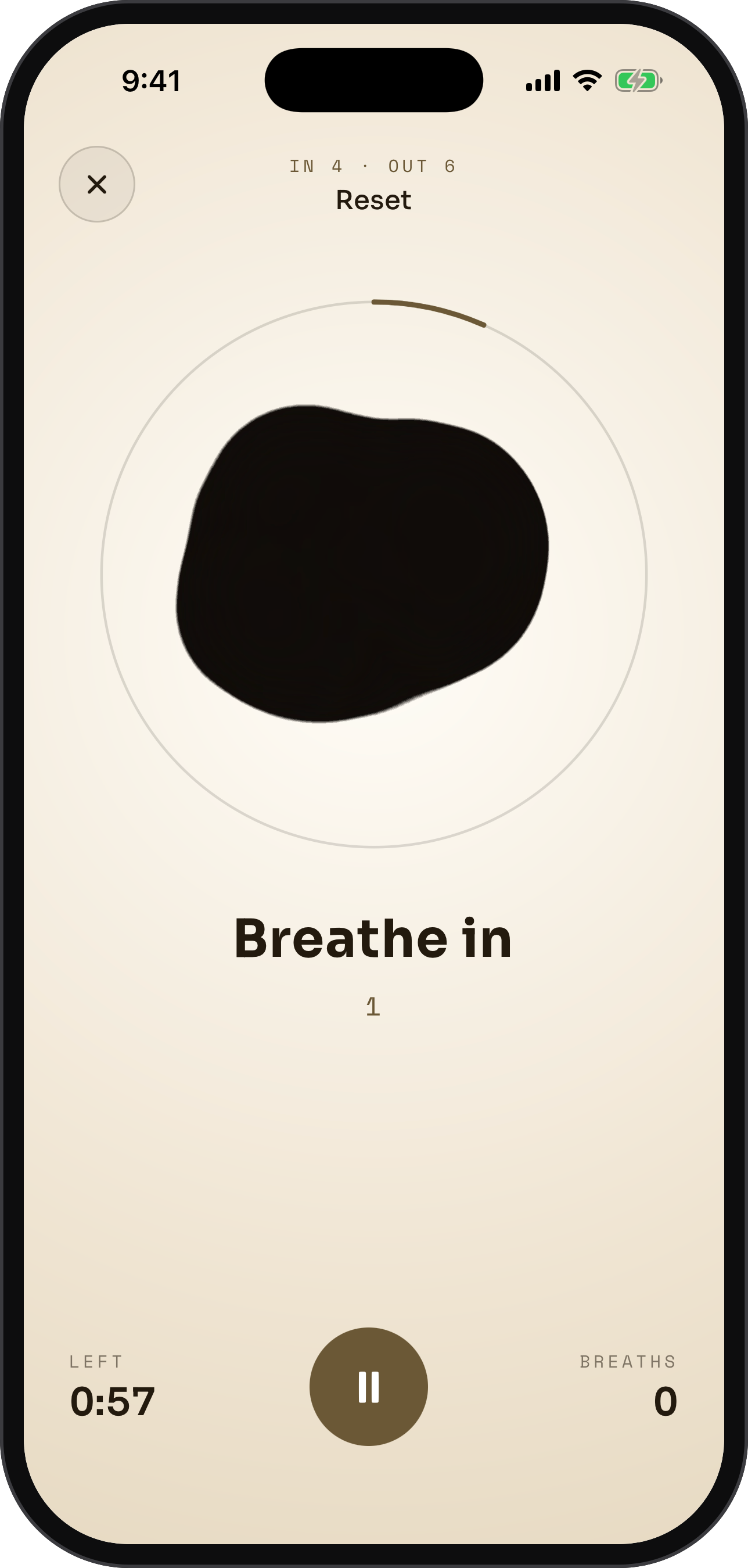
That's why INKI also has quieter experiences for breathing, drawing, playing with liquid ink, and making art.
The goal wasn't to make AI more human. It was to give AI a character that felt playful, expressive, and fun to interact with.
03 · Product goals
04 · Designing the experience
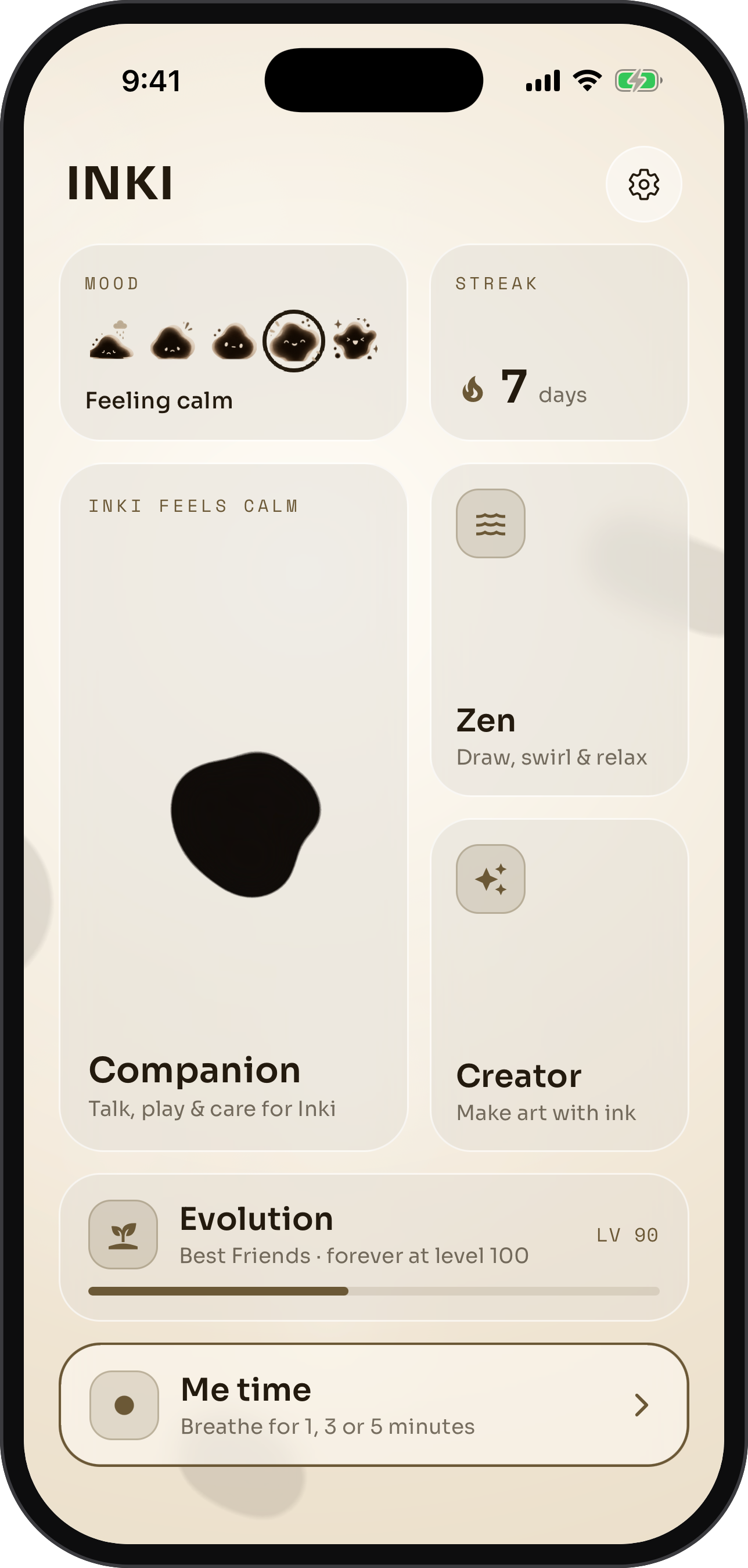
I organized INKI around six connected experiences, each offering a different way to interact with the same character.
05 · From interaction to connection
The challenge was making all these features feel like one companion, not six separate tools.
The experience begins with INKI itself.
A new user meets the character, chooses how to interact, and gradually discovers its different behaviors.
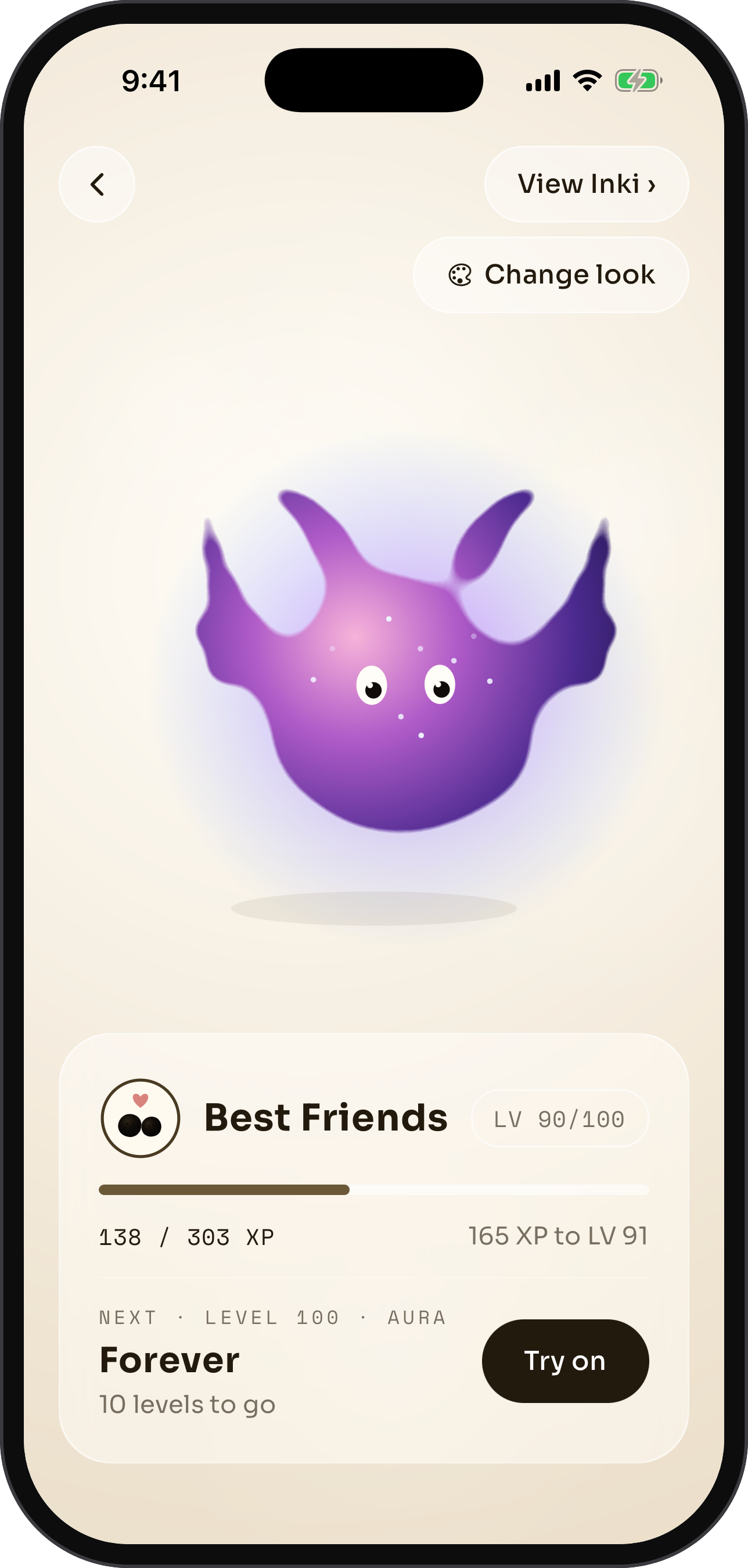
Talking, feeding, petting, and playing all contribute to the same relationship. As the bond grows, INKI evolves and becomes more personalized.
I wanted these small interactions to matter without turning the experience into a chore.
There are no punishments for missing a day, and the companion doesn't make users feel guilty for leaving.
INKI should be something people want to return to, not something they feel obligated to maintain.
06 · Designing and building with AI
INKI is one of my most hands-on projects, where design and engineering happened together from the beginning.
I used Figma and Claude Design to explore the visual direction and interaction concepts, then worked with Claude Code and Cursor to develop the app using React Native.
A major part of the challenge was designing the liquid character.
INKI needed to feel expressive without relying on a traditional face or humanlike avatar. I explored how movement, stretching, bouncing, spinning, and subtle reactions could communicate personality.
The conversational experience introduced another set of challenges.
Voice interactions need to feel responsive. INKI has to know when to listen, when to think, when to speak, and when to stop.
I designed and tested these states on real devices, refining how speech, text, character reactions, and animations work together.
The project also involved account management, subscriptions, backend integration, AI usage limits, and privacy considerations.
Building the product myself allowed me to move directly between design decisions, implementation, and testing.
07 · Key design decisions
08 · Launch and what's next
INKI brings together the core companion experience, conversational AI, voice interactions, Bond and Evolution, creative activities, account management, and subscriptions.
The product is designed to keep growing through new character behaviors, more personalized conversations, and additional ways to play together.
The next step is learning how people actually interact with INKI and using those insights to refine the experience.
I am also starting to explore how INKI could move beyond the phone and into the real world as a desktop robot.
09 · What this project represents
INKI is an exploration of what happens when AI, interaction design, and character design come together.
It challenged me to think beyond screens and flows and consider how movement, personality, memory, sound, and conversation can work together as one experience.
From the earliest concept to a working cross-platform application, I was responsible for the product vision, design, prototyping, implementation, and testing.
It's the kind of work I enjoy most: taking an idea from zero to one, figuring out the hard parts, and turning it into something people can actually use.