01 — Overview
WildKind began with a simple question: what if identifying something in nature was only the beginning of the experience?
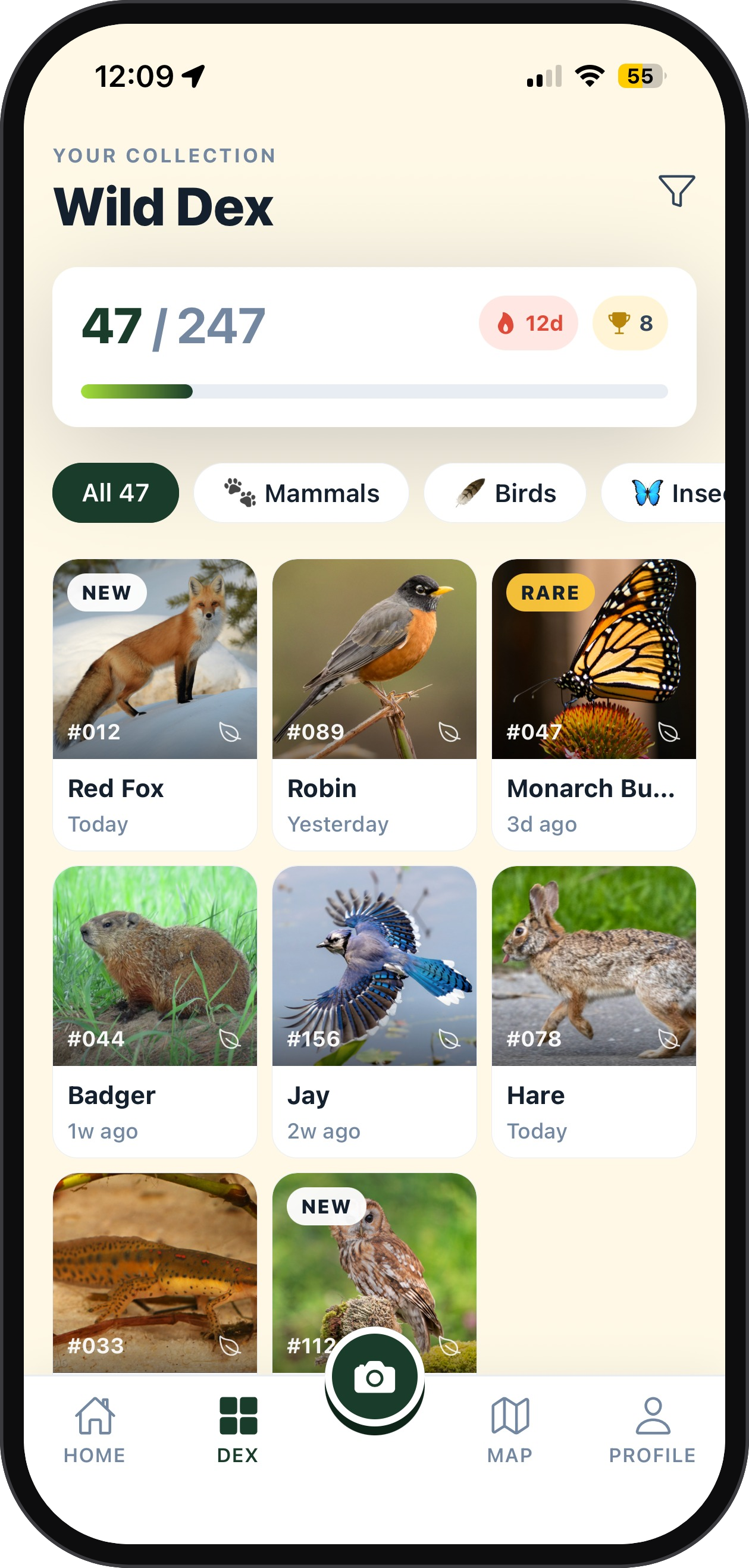
Most nature apps answer one question and then end the interaction. I wanted to make discovery feel more like a field guide crossed with a collection game, where finding a species gives people a reason to explore, save progress, learn something new, and come back again.
As founder, product designer, and builder under Celestial Works LLC, I set the product direction, designed the UX and visual system, and built the app from zero to one using Claude and Cursor alongside React Native and Expo.
02 — The product loop
Turn a real world sighting into an ongoing reason to explore.
WildKind is designed around a simple loop:
- 01See something interesting in the real world.
- 02Capture it with the camera or save a photo to identify later.
- 03Review the suggested match or choose the species manually.
- 04Save the sighting to a personal Wild Dex.
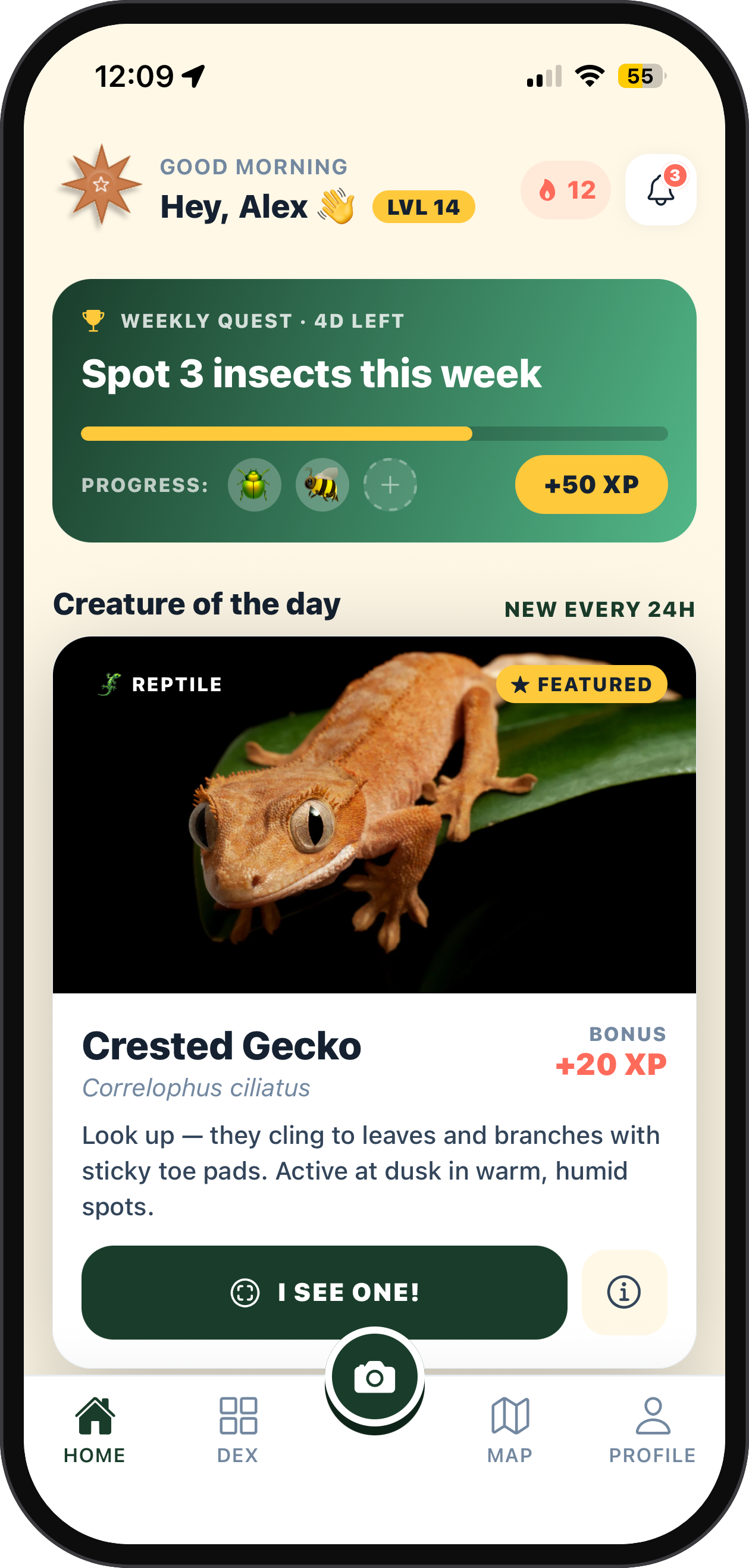
- 05Return for quests, badges, weekly creatures, stories, and new discoveries.
The goal is not just to identify a species. It is to make curiosity feel rewarding.
03 — What I designed and built
04 — Making a playful nature product people can trust
Playful enough to return to. Credible enough to trust.
One of the core design challenges was balancing the energy of a collection game with the credibility people expect from a nature product.
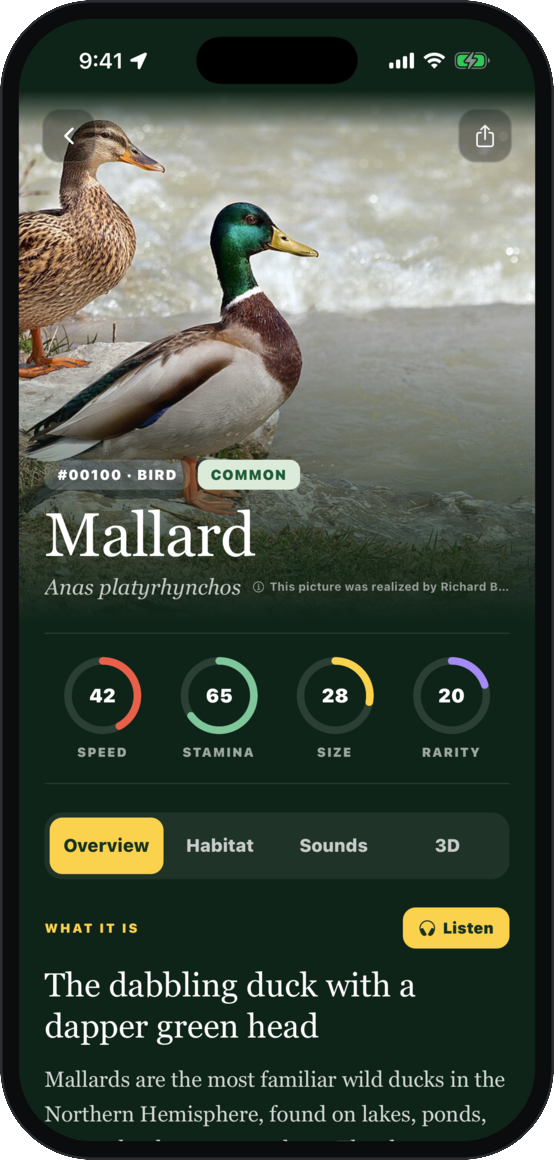
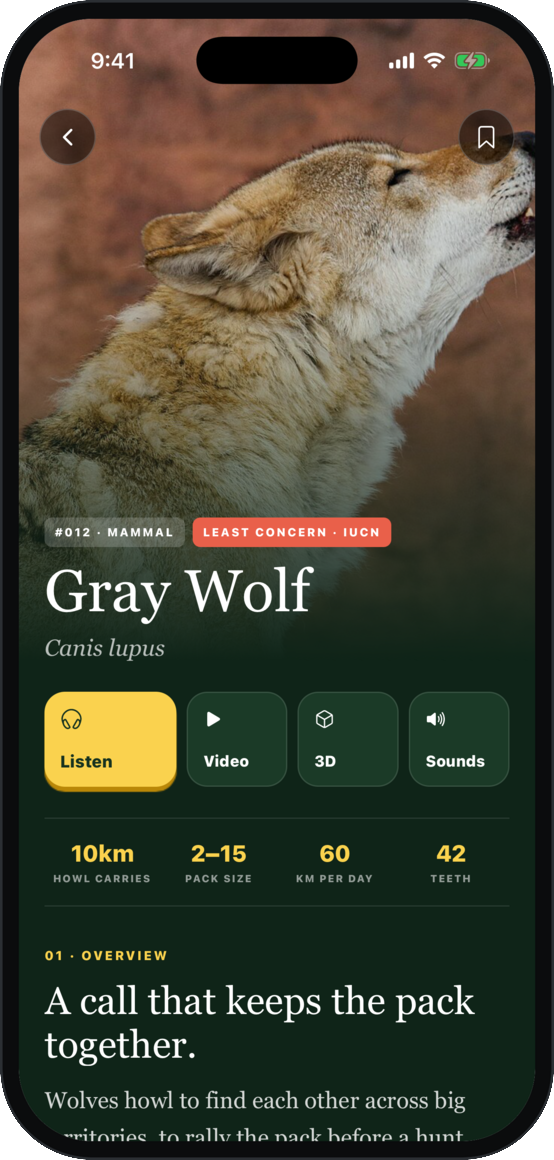
WildKind uses a warm, collectible visual system, but the product still needs to feel clear and trustworthy when people are identifying a species, saving a sighting, or deciding what to share.
The design combines a camera first experience, soft nature inspired visuals, clear species information, private by default settings, and a learning layer that supports both curious adults and families.
05 — Product decisions that changed the build
06 — Learning beyond the scan
A field guide that keeps growing with the user.
WildKind is designed to support curiosity after the initial identification.
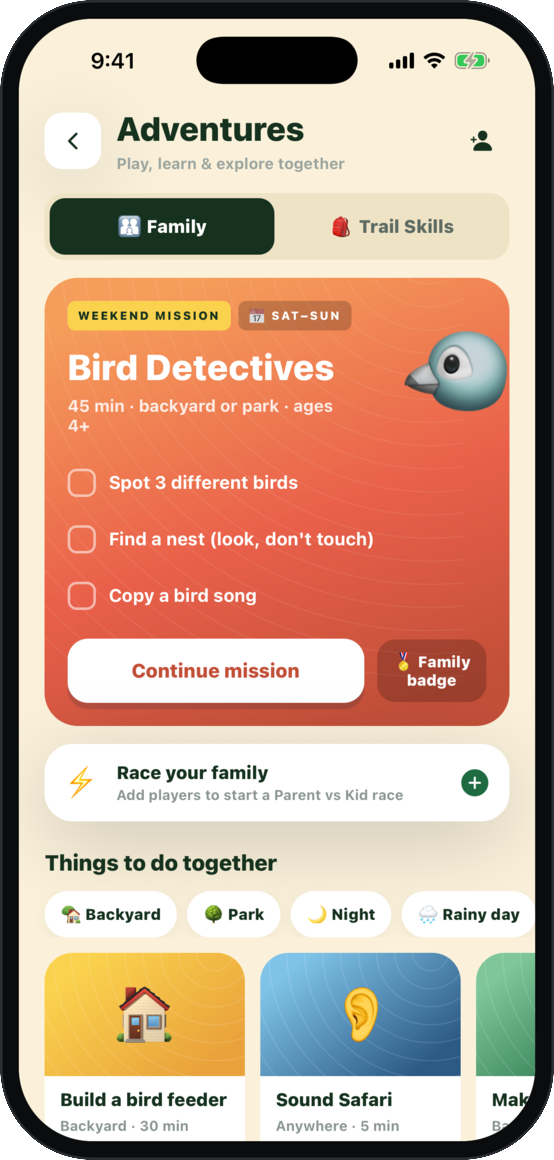
Field Notes provide weekly nature content planned across three years. Stories from the Wild add monthly narrative learning experiences. Adventures combine skill guides, Bingo, and narrated video content to make exploration feel more active and memorable.
These experiences turn WildKind from a one time utility into a product people can grow with.
07 — From product design to working app
WildKind is built with React Native and Expo for iOS and Android, Supabase for authentication, data, storage, and product logic, Mapbox for location based exploration, RevenueCat for subscriptions, ElevenLabs for voice, and Rive for animation.
The identification system combines Claude, OpenAI, and Google Vision. Free accounts use Claude Sonnet, while Pro accounts use Claude Opus.
The product currently includes about 71 screens, 23 server functions, 89 database changes, and 14 design handoffs.
Claude and Cursor helped me move faster from product decisions into working code, but I owned the product direction, interaction design, visual system, feature scope, and quality bar throughout the build.
08 — Current status
In TestFlight and preparing for launch.
WildKind has not launched yet. It is currently in TestFlight testing, with iOS targeted for around mid-November 2026 and Android targeted for around November 20, 2026.
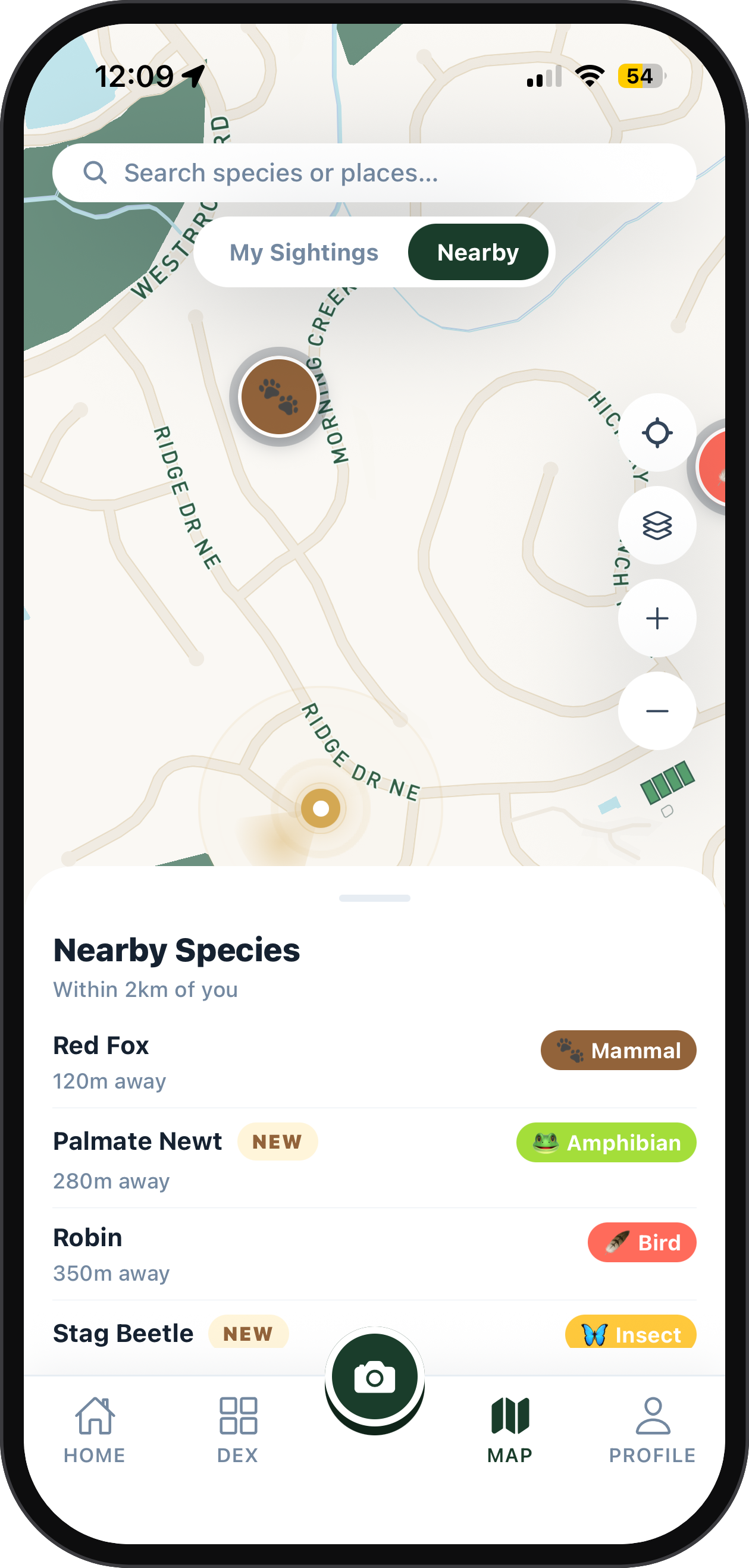
The website and waitlist are live. The app includes working flows for authentication, onboarding, camera capture, AI supported identification, manual species selection, saved sightings, Wild Dex collections, map exploration, family permissions, subscriptions, moderation, and privacy controls.
I am currently focused on final testing, identification quality, launch readiness, and refining the learning and return experiences.
09 — What this project shows
WildKind shows how I approach zero to one product work: start with a clear behavior loop, define the full system around it, make difficult scope decisions, and build enough of the experience to test the real product rather than just a visual concept.
It also shows my ability to work across product strategy, UX, visual design, frontend implementation, data structure, privacy decisions, monetization, family safety, and launch preparation.